Green Horizons
A Comprehensive Plan to Decarbonize Phipps' Historic Conservatory
Phipps Conservatory is advancing a groundbreaking, three-phase decarbonization initiative to transform its historic 1893 glasshouse and additional facilities into a net-zero energy campus powered by 100% renewable energy. This project will serve as a global model for retrofitting historic structures and inspiring large institutions and their communities to transition from fossil fuels.
For most of its 130-plus years, Phipps has relied on steam heat, first from coal and later natural gas. Now, through an innovative approach integrating ground-source and air-to-hot-water heat pumps and off-site solar energy, Phipps plans to eliminate its reliance on fossil-fuel-based steam heating, reducing emissions by 80% in the first two phases and achieving 100% decarbonization in the final phase.
Since 2012, all three of the new buildings on Phipps' lower campus have been net-zero energy buildings. The Green Horizons project will transition the remaining buildings, including the original landmark conservatory, to net-zero energy supplied by 100% renewable energy while preserving the historic character of the building. The project will also convert the other campus facilities – the Production Greenhouse, Welcome Center, Special Events Hall and Botany Hall – from fossil to renewable energy.
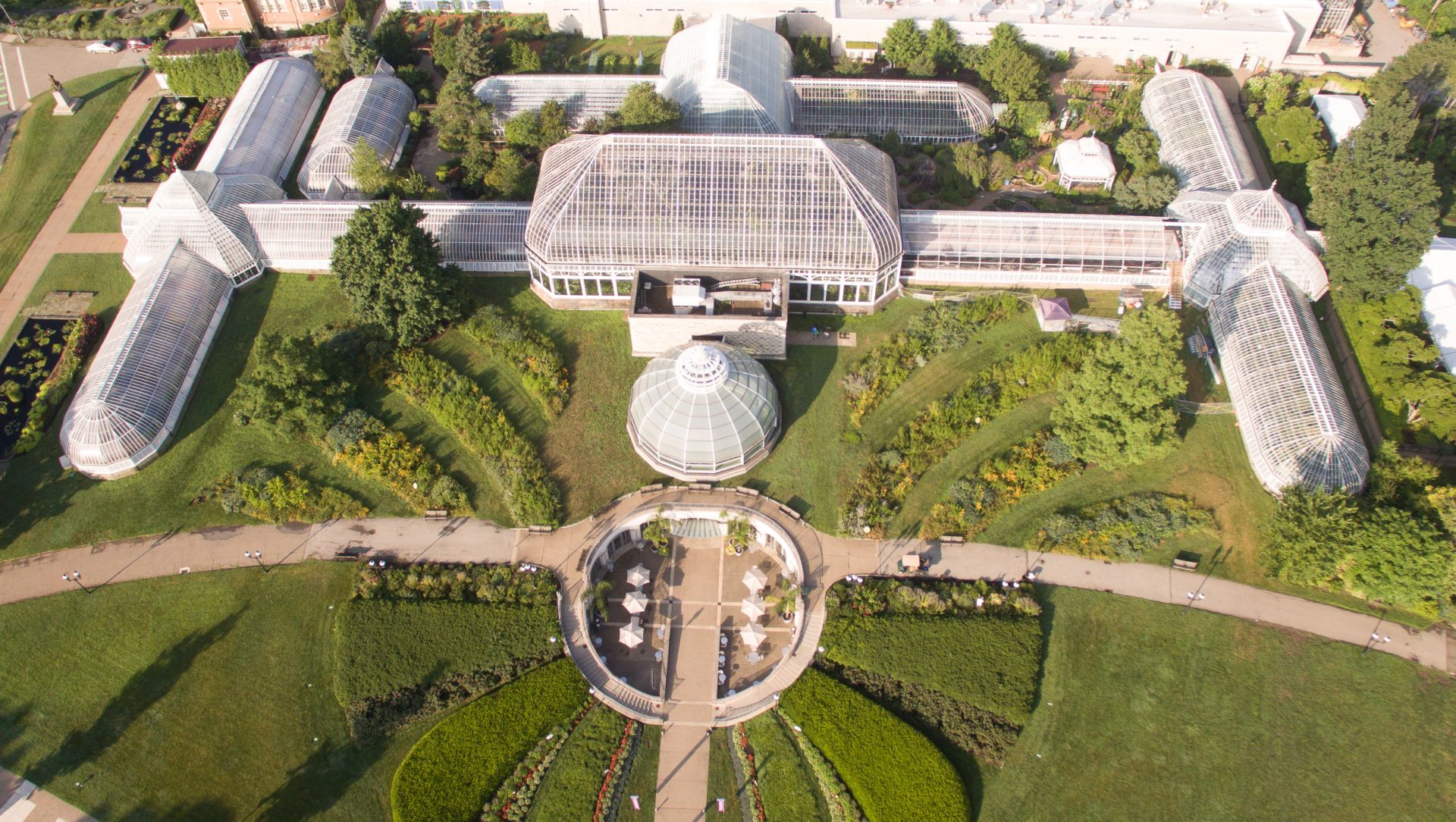
The project holds substantial local and global implications, demonstrating that the heating needs of even historic facilities can be met without greenhouse gas emissions. Designed to be cost-effective, Phipps' decarbonizing project will serve as an optimal model for historic buildings and those reliant on fossil-fuel-based steam-heating systems. The project will also serve as a national and international example of retrofitting historic buildings to achieve net-zero energy and emissions.
The project’s need is urgent and driven by the City of Pittsburgh's Climate Action Plan, which calls for 100% renewable energy in all city-owned facilities, including Phipps. The project’s objectives and impacts advance local, state, and federal plans for social, economic, and cultural development, including the Green Building Alliance 2030 District (regional) and the Southwestern Pennsylvania Commission’s SmartMoves Community Economic Development Strategy (CEDS). The CEDS plan focuses on infrastructure investment to a) create and sustain livable communities and economies through tourism and hospitality-based businesses; and b) install and promote infrastructure innovations and technologies for a more adaptable and resilient built environment.
The project is being undertaken in parallel to The Climate Toolkit’s Glasshouse Decarbonization Working Group, a global opportunity for botanic gardens and museums with historic glasshouses and conservatories to trade resources and experiences in decarbonization strategies. The decarbonization steering committee includes Royal Botanic Gardens Kew, Royal Botanic Gardens Edinburgh, and World Monuments Fund, with institutional participation from New York Botanical Garden, Chihuly Gardens & Glass, Atlanta Botanical Garden, Historic New England, and others.
Photos © Lofty Views