Phipps Stories
Create Your Own Houseplant Heaven!
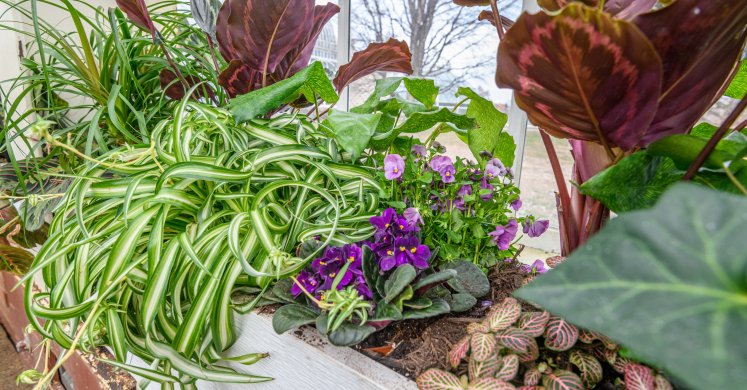
Bright, beautiful and fragrant orchids are the star of the show at Phipps right now. However, pay special attention to the Houseplant Heaven in the Victoria Room created by Senior Plant Procurement, Recorder and Design Associate Laura Schoch. Houseplant Heaven showcases the wonderful variety of plants that can be grown at home! Not only are houseplants beautiful, but according to an NIH meta-analysis, blood pressure and academic performance showed improvements for people in spaces with houseplants versus those in plant-free spaces.
As you walk around the Victoria Room pond, there are four beds that feature different categories of houseplants. In the first bed, you will find pet-friendly plants that are non-toxic. Many plants can irritate your pet’s mouth and stomach if they choose to chew them. If you have pets or small children, be sure to research any plant you bring into your home to ensure it is not toxic. The ASPCA has a searchable database of plants which is a good resource to check before bringing a plant into your home.
Next up are some classic houseplants. They include Fox Tail Ferns, Lucky Bamboo and Spider Plants. Follwoing the classic houseplants section features plants that are low-maintenance. There is some overlap with the classic houseplants, but there are some flowering plants, such as the sunny Kalanchoe, African Violets and the Crown of Thornes to add some color to your home.

The last bed contains plants with unusual and eye-catching leaves. According to Laura, they have evolved unique leaf patterns for a variety of reasons: photosynthesis efficiency, attracting pollinators or defense mechanisms. Plants such as Rex Begonias, Network Calatheas and Rick Rack Cactus are included in this group.

If Houseplant Heaven inspires you to try growing some houseplants of your own, Display Horticulturalist Everett Chronowski, offers some advice on getting started and how to maintain success with plants at home.
Plants have three necessities to survive: light, water, and fertilizer. A good place to start is by assessing the light in your home.Some homes may not have the bright sunlight houseplants crave, but many of the low-maintenance plants are low light tolerant, such as many Pothos, Spider Plants and many Philodendrons. Consider using full spectrum grow light bulbs in your lamps or investing in a grow-light if natural light is limited.
While plants need water to thrive, overwatering is the biggest killer of houseplants, according to Laura. Everett has some watering tips to avoid overwatering! Make sure to water thoroughly, allowing the water to run out the bottom of the pot, however, do not leave your plants sitting in water. Before watering again, allow the soil to dry out to about two inches deep which can check with your fingers or acquire a commercially available hydrometer. Every houseplant has different watering needs depending on season and environment, so make sure to check often until you learn each plant’s specific needs.
Houseplants also need to be fed occasionally. Everett recommends using any commercially available houseplant fertilizers. You can choose either granular or liquid forms but make sure to follow the directions on the package for dosing and mixing. He uses granular on most of his plants for ease of mixing. However, for his small but precious orchid collection, he uses liquid for a more precise dose.
Everett’s final piece of advice is to learn as much as you can about how your new plant lives in the wild. This will tell you a lot about the light, soil type and moisture the plant will require in your home. He also recommends trying many kinds of plants and experimenting to find out what will do well in your home. Following this advice will get you started on the right foot and always remember to find the joy in creating your own green oasis!