Rare Triple Agave Bloom Event, Including 50-Year-Old Historic Plant, Unfolds at Phipps Conservatory
For Immediate Release: Thurs., April 23
Contact: Joe Reed | Director of Marketing and Communications
412-622-6915, ext. 3801 | jreed@phipps.conservatory.org
Rare Triple Agave Bloom Event, Including 50-Year-Old Historic Plant, Unfolds at Phipps Conservatory
Final Weekend of Spring Flower Show Enhanced by Bloom Phenomenon
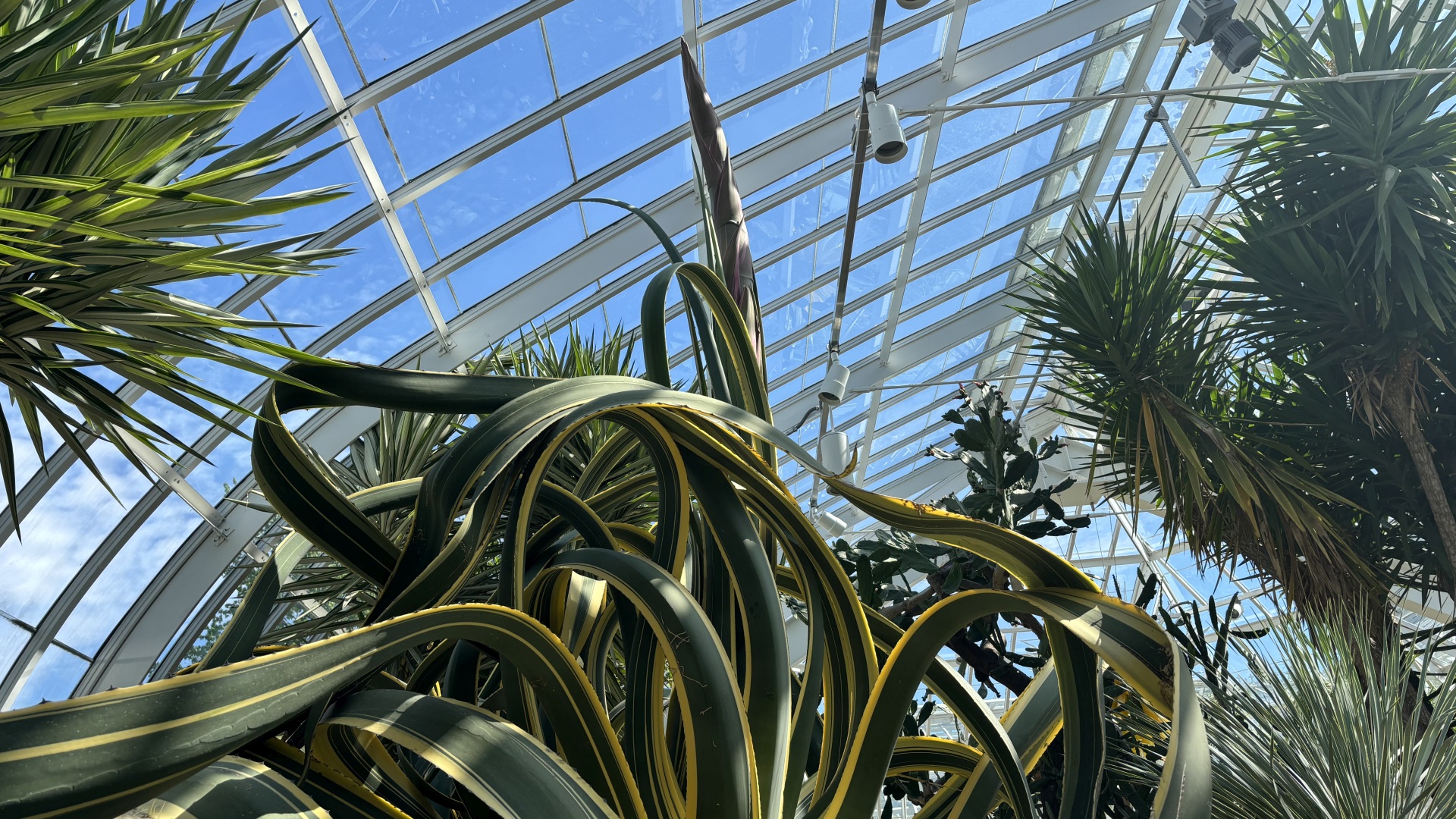
Pittsburgh, PA – Visitors to Phipps Conservatory and Botanical Gardens now have a rare opportunity to witness a remarkable natural event: three agave plants blooming simultaneously, including a historic Agave americana estimated to be 50 – 60 years old.
Agaves are known for their dramatic life cycle. These striking desert plants are monocarpic, meaning each plant blooms only once in its lifetime before slowly declining. At Phipps, guests can now observe this extraordinary phenomenon across three distinct species at different stages of development.
Currently, a Thorncrest agave (Agave lophantha), approximately 10 – 15 years old, is nearing the end of its bloom cycle. A Blue agave (Agave tequilana), around 15 years old and best known as the source of tequila, has begun producing its towering flower spike and is expected to fully bloom in the coming weeks. The centerpiece of the display, a large, variegated Agave americana, beloved by Phipps visitors for years for its octopus-like form, is just beginning its growth phase, with several months of dramatic development ahead.
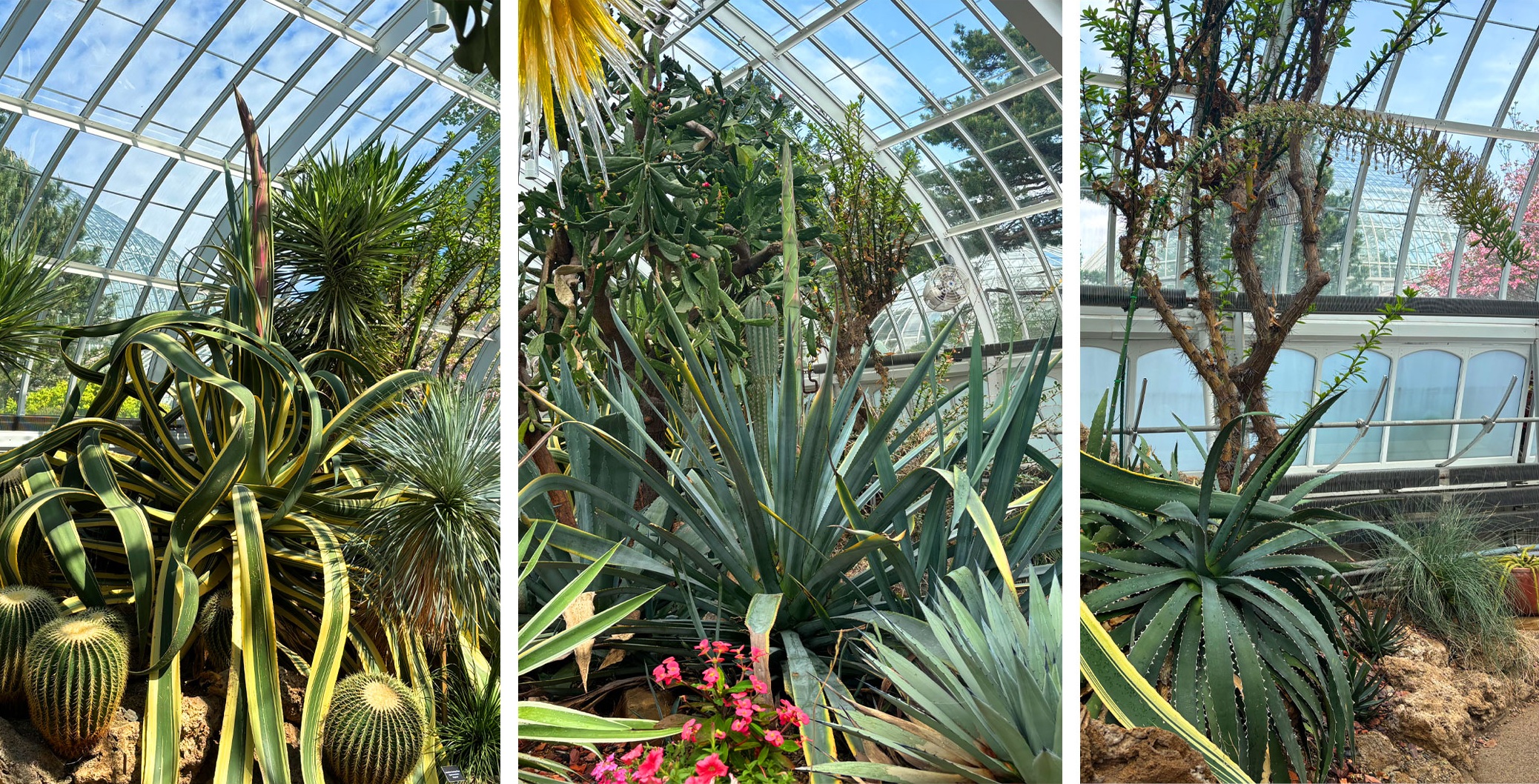 From left to right: Agave americana, Blue agave (Agave tequilana), Thorncrest agave (Agave lophantha)
“This is an unusual convergence,” said Phipps Director of Horticulture Ben Dunigan. “While we’ve seen multiple agaves bloom at once before, it’s rare to have multiple large species bloom alongside one another, especially including a specimen of the Americana’s age and size.” Dunigan noted that, to accommodate the largest bloom, Phipps will remove a pane of glass from the Desert Room ceiling, allowing the spike to extend beyond the height of the room.
Agaves belong to the asparagus family, a connection made evident by the shape of their towering blooms. These massive flower spikes, often resembling giant asparagus spears, can grow rapidly, followed by a flowering display lasting about a month. Although agaves flower only once, they ensure their legacy by producing “pups,” or offshoots, which are already visible around each plant. Following the completion of the bloom cycle, the agaves will be replaced with new desert specimens as part of Phipps’ ongoing display evolution.
This rare triple bloom is expected to offer several months of visual interest, making now an ideal time for visitors to experience one of nature’s most dramatic botanical events. This weekend, the plants can be viewed alongside the Conservatory’s Spring Flower Show: True Colors, which runs through Sun., April 26. The blooming process will continue as Phipps prepares for its Summer Flower Show: Alice’s Adventures in Wonderland, opening Sat., May 16.
###
About Phipps: Founded in 1893, Phipps Conservatory and Botanical Gardens in Pittsburgh, PA is a globally recognized green leader with a mission to inspire and educate all with the beauty and importance of plants; to advance sustainability and promote human and environmental well-being through action and research; and to celebrate its historic glasshouse. Encompassing 15 acres including a historic 14-room glasshouse, 23 distinct indoor and outdoor gardens and industry-leading sustainable architecture and operations, Phipps attracts more than half a million visitors annually from around the world. Learn more at phipps.conservatory.org.
Watch TEDx: What We Can Learn From an Old Glasshouse: A look at the evolving way we connect people to nature at Phipps, demonstrate how human and environmental health are inextricably connected, and show that to age gracefully, we must continually reinvent ourselves to evolve with the rest of the world.